This is from a friend of my daughter's father. We got it last year and it's amazing.
Worth making a part of your annual Christmas ritual...
Here goes:
(Makes approx 2.5 Litres)
6 eggs, separated
1.5 cups castor sugar
3 cups milk
2x600ml thickened cream
1.5 cups brandy
1 tsp vanilla essence
1/2 tsp vanilla essence
dash bourbon (optional)
2 Tab sugar extra
The day before:
Separate eggs
Beat yolks until thick
Add 1 cup castor sugar gradually
Add brandy, stirring gradually
Add milk
In a separate bowl:
Whip 600ml cream, then add to yolk mix
In a separate bowl (clean and dry):
beat egg whites until soft peaks form
Add remaining 1/2 cup castor sugar gradually & continue to beat until soft peaks form
Fold whites into yolk mixture
Add vanilla and cinnamon
Cover and refrigerate.
Before serving:
Whip second 600 ml of cream and add sugar and dash of bourbon if using
Fold whipped cream into egg nog just prior to serving.
Consume in moderation!!!!
Saturday, December 22, 2012


Monday, November 19, 2012
Getting my Goat - Part One
This is a story about some goats. Some of them will be eaten. If you don't like that idea, then don't read on...
We recently moved to a property that happens to be next door to a goat cheese dairy, and quickly found out that they were about to have a whole lot of baby billy goats born that they didn't have a use for (you can't milk a boy goat). The plight of male billys from goat dairies is another story, and I will give you a link to an interesting article by Hugh Fearnley-Whittingstal about it but not until the end of my tale.
We decided to take on the challenge of raising a few of these boys at our place, the idea being that we would keep two as lawn mowers (we have a LOT of grass), and two would be for meat.
The first hurdle was getting this idea approved by our children, one of whom has been a vegetarian for about 8 years. Initially they didn't like the idea and only wanted the two as pets, but I basically told them we were doing it and they'd have to get used to the idea! Which they did, to their credit.
At least I gave my daughter the choice of which ones would be pets and which would be dinner. She chose the two brown ones as pets, and the (slightly less cute) white ones as dinner. More about that a bit later...

So we went and collected these goats who were about 5-7 days old, and brought them home in a box in the boot of my car, with a small bag of milk powder and basic instructions on how to keep them alive. (I must say here that our neighbours are the most lovely, helpful people. Although they had about 200 babies being born at that time, they still checked in with us and made sure we were doing ok - they really care about their animals).
My first shock was buying the milk powder - $98 for 16kg! That's probably an ok price, but it made me realise these goats were an investment - they'd better be worth it! We also needed to buy little teets that screw onto plastic bottles ($4 each) and fix up a pen for them, but that was about it. We borrowed a 'calfateria' from our neighbours as well but we didn't end up using it.
Things started really well, with at least two of us getting up every morning for their 6am feed. I'm not normally a morning person, but getting up at that hour made a huge difference to the family's day. We started eating porridge together around the kitchen table after feeding, and there was plenty of time for lunch making and talking about school, etc... I was actually in heaven.
That lasted for about 3 or 4 weeks.
Goats are hungry little buggers and I was beginning to wonder when they could move on to solid foods? They were showing an interest in grazing so we let them out under supervision. They stayed pretty close and made us all laugh as they seemed to race each other up and down lane ways on our property, bucking and leaping at odd angles as they went. We found that they got on quite well with our chickens and one of our cats, and so again the sense of domestic bliss was restored.

We went on holiday and had to leave them in the care of our neighbours for a few weeks. This worked out well (another bag of milk powder - our third - and a bag of goat feed later), but when we returned from our trip they had gotten a lot bigger! A bit of flimsy chicken wire and some small sticks was no longer enough to keep them contained and they soon became a nightmare! Escaping, eating our raspberry canes, barging through hedges to get to their favourite plants. I had visions of them running blindly onto the road and causing major accidents. Where were the cute little babies we'd left only a few weeks ago? It was time for a new strategy.
Before we got the goats, I'd read some books and blogs to find out what to do. We were planning to tether the lawn mowing goats, and to do this properly you're supposed to get metal stakes with swivels and proper chain.
I thought I'd try rope for a few days.
That was 6 weeks ago.
I'm still intending to get the proper set up - it just hasn't been a "financial priority" of late. Sorry goats. They actually don't seem to mind.

They've now eaten down most of the blackberry behind the sheds, and are happy to be positioned around the property, grazing away on different leaves and grass. They get tangled from time to time, but we check them often and put them in their pen most nights. I think they're as happy as goats on ropes can be.
The next challenge came when we decided it was time to 'dispatch' of the white ones. Apart from the ick-factor associated with killing an animal that size, we had also come across an unexpected dilemma.
Early on, in about the first or second week, one of the white goats had become ill. It stopped eating, and would just stand or lay in a corner, shivering and getting weaker each day. We rang the neighbours and tried all their suggestions. We brought him up to the house and left him in a box in the porch overnight with a little blanket and some straw. We gave it extra cuddles and talked to it, willing it to get better (even though I'd read that this might not happen).

Stay tuned to see what happened next....
Friday, April 27, 2012
Pear, almond & semolina cake
Try this recipe over the weekend - I just made it up and I think it's worth sharing (I'm on to my second slice!). It's getting cold, so this is the perfect thing to make the house feel warm & cosy.

Pear, almond & semolina cake
200g butter
1 cup brown sugar
zest of 1 lemon
3 eggs
vanilla essence
250g almond meal
250g semolina
2 tsp baking powder
2 pears
Cream butter & sugar with lemon zest
until creamy.
Add eggs one at a time, beating after each
one.
Fold in essence, almond meal, semolina
& baking powder.
Place mixture into a large-ish cake tin (lined with baking paper) & spread out evenly.
Quarter and core pears (don’t peel).
Slice each quarter into 4, lengthways.
Place the slices of pear, skin side up,
into the dough, fairly close together so that you fit all or most of them in.
Push them down a bit so they don’t pop up.
Sprinkle the pears with ground nutmeg,
cardamom and allspice.
Bake at 170 for about an hour or until it’s
done (careful not to let it dry out too much).
Let it sit in the tin for 5-10 min after you take it out of the oven, then transfer to a wire rack to cool. Serve with yoghurt or double cream.
Makes a crumbly, moist, rich buttery
perfect Autumn cake!
Monday, March 5, 2012
A box of tomatoes

I am a total sucker for a bargain, and when I saw this box of sauce tomatoes at my local veggie growers for $5, even though I have no time to do anything with them, I couldn’t resist.
If they’d been $10 I would have passed them up – but $5? Too good!
So here’s what I’m going to do with them:
Wash the tomatoes & cut out any bad bits, then chop them up roughly and spread them out in a roasting dish or two.
Turn the oven onto about 200C.
Then spread any or all of the following over the top, depending on what you like:
- Oilve oil
- Balsamic vinegar
- Salt & pepper
- Herbs (dried or fresh or both)
Eg: basil, thyme, rosemary, parsley, bay leaves
- Whole garlic cloves (you don't even have to peel them)
- An onion or two (brown or red), roughly chopped
- Lemon zest
- Dried or fresh chilli (just a little bit!)
Give it a quick toss in the tray, then pop them in the oven for about 1 1/2 hours, or until it’s smelling DIVINE and the garlic is soft. You can turn them during cooking if you want to, but don't worry about a small amount of browning around the edges as it adds flavour.

The thing that usually puts me off doing anything with bulk lots of fruit these days is the end bit – the bottling. I’ve done heaps of it and I can’t be bothered any more.
Soooo…
I’m going to put the resulting ‘sauce’ into freezer bags (I’ll use my vacuum sealer, but any clean plastic bag is fine, zip-lock bags are good) once it’s cooled down.
I always freeze this sort of thing as flat as possible (see the picture) so that it doesn’t take long to defrost when you want it later on. Don’t forget to name and date the bag – saves the guess work 6 months down the track.

This tomato base can now be used for all sorts of things.
- Simply reheat and serve with fresh pasta
- Use in place of crushed or tinned tomatoes for bolognase, chilli con carne,, minestrone, etc…
- Reduce the liquid by cooking it down in a large frying pan to make pizza sauce
- Add to more sautéed onions & garlic, some red lentils and even some roasted capsicum or other veggies, pour over stock or water, cook until the legumes are soft then puree to make a delicious soup. Top with coriander and feta to serve.
- Use as layers in a lasagna (esp. veggie lasagna – yum!)
- Place some good quality sausages (or veggie alternative, like whole baby zucchini or tofu) in a roasting dish, ½ cover with the roasted tomatoes & bake until sausages are well cooked
Too easy!
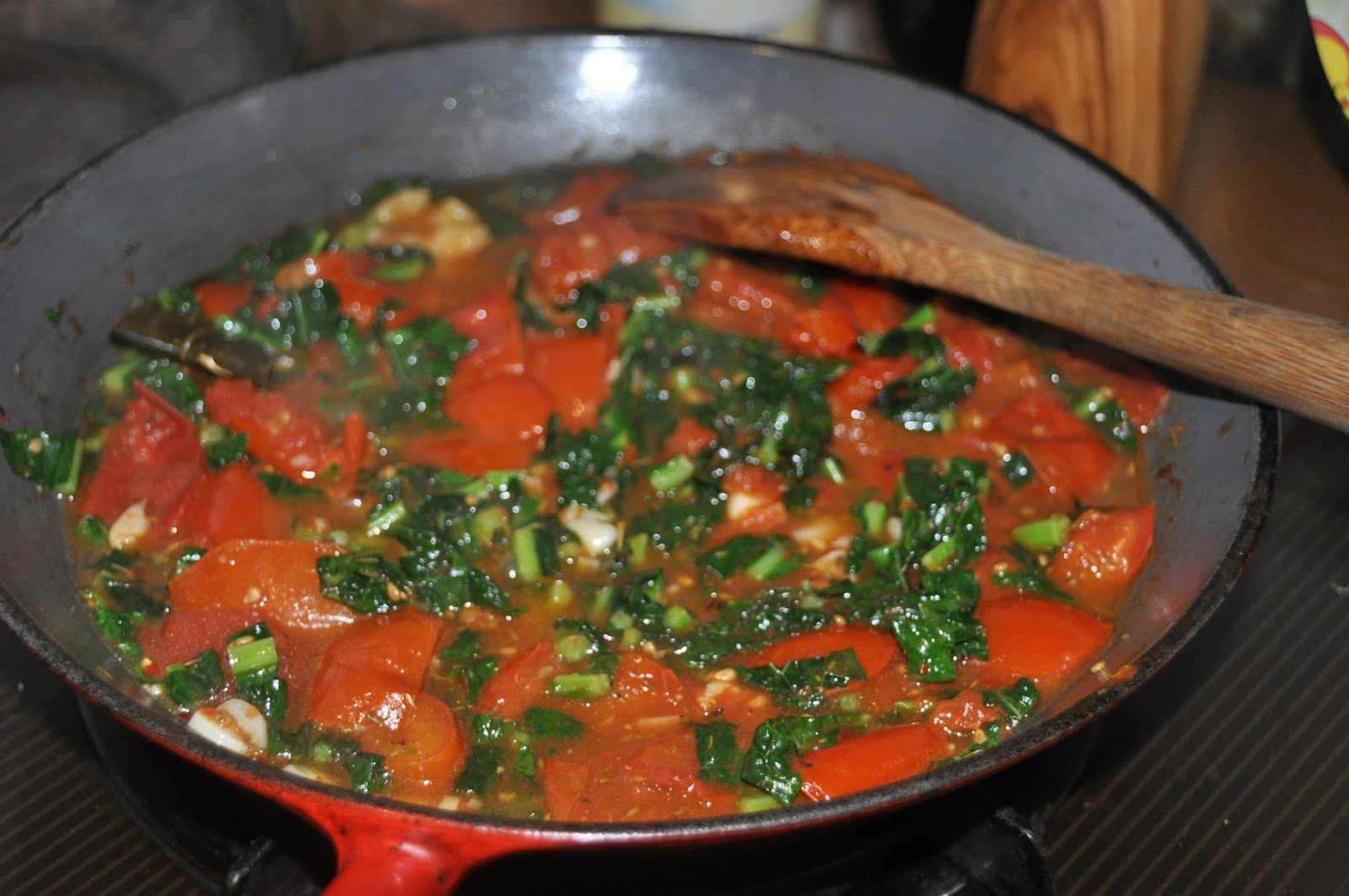
Oh yes - if you were wondering what the green stuff is in the top photo - it's kale. I use it for green smoothies in the morning but I also love eating it with pasta, so I fried some up with a bit more garlic, chilli and olive oil, then added some of the roasted tomatoes for my pasta sauce this evening. Add to that a bit of chilli pecorino & you're in business!
Monday, February 13, 2012
No more meals.... for now.
Ginny’s Kitchen is no longer producing meals – but that doesn’t necessarily spell THE END for the GK business.
The other day I scrubbed the words "Ginny’s Kitchen – Food on the Fly” off my sign on the fence. I could have just taken the whole thing down but I love the heart logo that my friend Kate designed, and I wanted to leave it up there.
We live on a busy corner, and I like the fact that visitors and locals drive past every day, seeing a symbol of love standing out there for no particular reason. Some people might know it went with my kitchen, but most will have no idea what it means, and so I hope that it just makes them feel a little bit warmer on the inside, remembering love, especially in a beautiful place like Red Hill.
Underneath the sign, we’ve actually got a new sign, advertising local avocados. Maybe people will think that’s what the heart is about? We’ve struck a great deal with the avocado grower where we get a regular supply of his produce in exchange for displaying his sign, so I don’t mind him taking advantage of the love heart at all!
So what’s going to happen to Ginny’s Kitchen?
After all the hard work of last year – hours spent developing labels and recipes and “the brand” I don’t intend to leave it all behind, but I had to make a choice between regular employment (I’m a public servant in my other life) and lots of cooking, and for now the regular employment has won out.
I got to a point where I needed to be able to grow the business in order to make it worth while, but I didn’t have enough time to do that (as well as cook, work, run a family and have some time to myself!), and towards the end of the year I began to feel like I wasn’t doing anything well.
It is a little frustrating, as there are plenty of opportunities to grow the meals business in all sorts of directions, but now that I’ve stopped doing it, I actually feel kind of relieved. The blurred lines between home and work didn’t suit me. I need to find another way to be creative and lucrative – outside of my precious family life.
Food is my creative outlet. It’s appealing to me because it has a tangible product at the end of your hard work, and it’s usually something that others appreciate. I enjoyed having a wider audience to share my love of cooking with, but once it became hard work, I stopped enjoying it as much. And since I’ve stopped cooking for the business, I’ve been taking enormous pleasure in tending my veggie garden, cooking simple salads and BBQs, and playing with my kids
Eating well is a life-long passion and pursuit, which I hope I can continue to share with others in as many ways as possible. In my other work I still get to do this through Community Kitchens (communitykitchens.org.au). I also want to get better a sharing thoughts and recipes on this blog. I can cook for my friends and family and then I will just have to wait and see what the future has in store…

Anyone got a good recipe for avocados (other than guacamole!)?
Sunday, April 3, 2011
I found my butcher
In my efforts to source locally grown produce for the take home meals I'm about to launch, I followed a lead from a friend who had told me about her cattle producing neighbours Tim and Ben (father and son).
I knew they had an outlet in Mornington on Wilson's Rd, so with the help of Google maps I quickly found a name and number, and got on the phone to get acquainted.
A few hours later I was down there in person, getting a tour of their little butchers shop.
Ben is a lovely man with a typical butcher's disposition. He loves his meat, and lots of it! I spent at least half an hour in his shop, talking about all the various cuts of meat I'm going to need, debating the virtues of pork shoulder versus pork neck, asking one of his customers for tips on cooking beef cheek, and generally getting a sense of whether I was going to do business with this place.
My visit ended with a very generous bag of 'samples' - beef cheek, sausages, mince & chuck steak - which Ben refused to let me pay for (however he did mention he likes red wine, so I plan to be better prepared next time I visit!). The beef cheek was a bit confronting. Much larger than I had expected, and with a few unfamiliar bits to trim that are going to prove challenging, but I know the effort will be worth it. I plan to buy some Pedro Ximenez sherry to cook it with, but in the mean time I've vacuum sealed it with my new vacuum sealing machine and popped it in the freezer - I'll revisit it when I have some time to do the surgery!

The mince we got was delicious. I know it's boring, but I'm planning on doing my tried and true version of bolognase sauce to sell. Ben's mince had just the right amount of fat to make it juicy, but not greasy. And it tasted delicious. It's a bit more expensive than other mince I can get, but figure I'd rather buy something that's locally grown and good quality, than cheap and from goodness-knows-where!
Which brings me to the local bit. Ben was almost misty-eyed when he talked about his animals. At the moment there are a lot of calves being born, so goodness knows how he manages to be front of house at the butchers shop AND manage the farming side of it, but I suspect it has a lot to do with his father Tim. Tim, by the way, is a man I had already met a month or so ago when my friend and I took some kids to his farm to pick blackberries. Little did I know that the gentle black bull I had to walk past to shut the gate that day was the sire of the meat I'm about to be cooking on a regular basis - but that's what I love about this story!

The cattle are born and raised in Main Ridge - one of my favourite places in the world and about 3 minutes drive from where I live. When they're grown to the right age, they're calmly hearded into a top pen in the afternoon and left to eat (their last supper!) while it gets dark. At about midnight, Ben walks them onto his truck and drives them up to Warragul to be slaughtered at a place that he claims is the "best in the southern hemisphere" because of their methods, and also their animal husbandry techniques. It seemed to me like a long way to go for a seemingly simple procedure, but it made me realise that there are probably 'ways and ways' to kill a beast, and it reassures me to know that he would go to such lengths to ensure his animals are not stressed in their final hours of life. (Oh, I probably should have said earlier that if you don't like to think about where your meat comes from, don't read this!).
He then brings back the carcasses and hangs them in his chiller room for a minimum of 3 weeks. This process is what distinguishes his meat from what you'd buy from the supermarket (most of which was still alive only days before it hit the shelves), as it develops a flavour and texture that is what good meat is all about. He let me hang out with these ageing bodies, which I probably should have tried to appreciate more, but it all just looked like legs and ribcages to me - the meat was hiding beneath layers of blue skin and dull bones.
 Not enough to put me off though, and the end result is that I CAN'T WAIT to start using his meat. Interestingly, he told me about his experiences with supplying local restaurants with his product. He tried it for a while, but found it was not a sustainable relationship. Restaurants change their menus, their numbers and therefore their demands from week to week. Because Ben's meat takes 3 weeks to mature, filling large orders with only a week or two's notice is either impossible, or it means using all his stock for the shop, leaving his other customers with nothing to buy. He has now had to say no to all but two local businesses, and these lucky two are willing to work with him in timing, quantities and seasonal fluctuations - all of which come into much sharper focus when you're dealing with local products.
Ben likes the idea of supplying my business because he sees that I will have known quantities week to week, I aim to grow slowly, and I can plan ahead and be flexible about supply. We also hit it off really well, and I think we'll become good mates as I continue to order from him and talk to him about what's going on at his farm. I love being able to have that local knowledge, and long term I actually think that having a relationship with my suppliers will mean my products are not only more sustainably produced, but also ensure a higher quality product that is reflective of seasonal influences and protected from global instability.

This is Ben's Grandfather, selling meat to locals from the back of his cart in country Victoria. Circa 1950s
I knew they had an outlet in Mornington on Wilson's Rd, so with the help of Google maps I quickly found a name and number, and got on the phone to get acquainted.
A few hours later I was down there in person, getting a tour of their little butchers shop.
Ben is a lovely man with a typical butcher's disposition. He loves his meat, and lots of it! I spent at least half an hour in his shop, talking about all the various cuts of meat I'm going to need, debating the virtues of pork shoulder versus pork neck, asking one of his customers for tips on cooking beef cheek, and generally getting a sense of whether I was going to do business with this place.
My visit ended with a very generous bag of 'samples' - beef cheek, sausages, mince & chuck steak - which Ben refused to let me pay for (however he did mention he likes red wine, so I plan to be better prepared next time I visit!). The beef cheek was a bit confronting. Much larger than I had expected, and with a few unfamiliar bits to trim that are going to prove challenging, but I know the effort will be worth it. I plan to buy some Pedro Ximenez sherry to cook it with, but in the mean time I've vacuum sealed it with my new vacuum sealing machine and popped it in the freezer - I'll revisit it when I have some time to do the surgery!

The mince we got was delicious. I know it's boring, but I'm planning on doing my tried and true version of bolognase sauce to sell. Ben's mince had just the right amount of fat to make it juicy, but not greasy. And it tasted delicious. It's a bit more expensive than other mince I can get, but figure I'd rather buy something that's locally grown and good quality, than cheap and from goodness-knows-where!
Which brings me to the local bit. Ben was almost misty-eyed when he talked about his animals. At the moment there are a lot of calves being born, so goodness knows how he manages to be front of house at the butchers shop AND manage the farming side of it, but I suspect it has a lot to do with his father Tim. Tim, by the way, is a man I had already met a month or so ago when my friend and I took some kids to his farm to pick blackberries. Little did I know that the gentle black bull I had to walk past to shut the gate that day was the sire of the meat I'm about to be cooking on a regular basis - but that's what I love about this story!

The cattle are born and raised in Main Ridge - one of my favourite places in the world and about 3 minutes drive from where I live. When they're grown to the right age, they're calmly hearded into a top pen in the afternoon and left to eat (their last supper!) while it gets dark. At about midnight, Ben walks them onto his truck and drives them up to Warragul to be slaughtered at a place that he claims is the "best in the southern hemisphere" because of their methods, and also their animal husbandry techniques. It seemed to me like a long way to go for a seemingly simple procedure, but it made me realise that there are probably 'ways and ways' to kill a beast, and it reassures me to know that he would go to such lengths to ensure his animals are not stressed in their final hours of life. (Oh, I probably should have said earlier that if you don't like to think about where your meat comes from, don't read this!).
He then brings back the carcasses and hangs them in his chiller room for a minimum of 3 weeks. This process is what distinguishes his meat from what you'd buy from the supermarket (most of which was still alive only days before it hit the shelves), as it develops a flavour and texture that is what good meat is all about. He let me hang out with these ageing bodies, which I probably should have tried to appreciate more, but it all just looked like legs and ribcages to me - the meat was hiding beneath layers of blue skin and dull bones.

Ben likes the idea of supplying my business because he sees that I will have known quantities week to week, I aim to grow slowly, and I can plan ahead and be flexible about supply. We also hit it off really well, and I think we'll become good mates as I continue to order from him and talk to him about what's going on at his farm. I love being able to have that local knowledge, and long term I actually think that having a relationship with my suppliers will mean my products are not only more sustainably produced, but also ensure a higher quality product that is reflective of seasonal influences and protected from global instability.

This is Ben's Grandfather, selling meat to locals from the back of his cart in country Victoria. Circa 1950s
Sunday, February 20, 2011
First prototype!


Things are hotting up!
This is the beginning of the packing decisions that have to be made. (All comments welcomed!)
I'm happy with the pouch and the logo (although it won't have the line "great food to go" I need to come up with something 'original'). Quite like the font.
The top of the bag looks awful though. I think what I'll do is use a piece of red card, folded over the top, with general info on it that I can staple onto all my products.
This particular dish is delicious too - eggplant is all creamy, tomatoes add tang and the lamb is deliciously rich and lamby. Bought a whole shoulder from the butcher today and I'm happy with the result. Can't wait to try a whole pork shoulder next! YAY!!!!!
Subscribe to:
Posts (Atom)